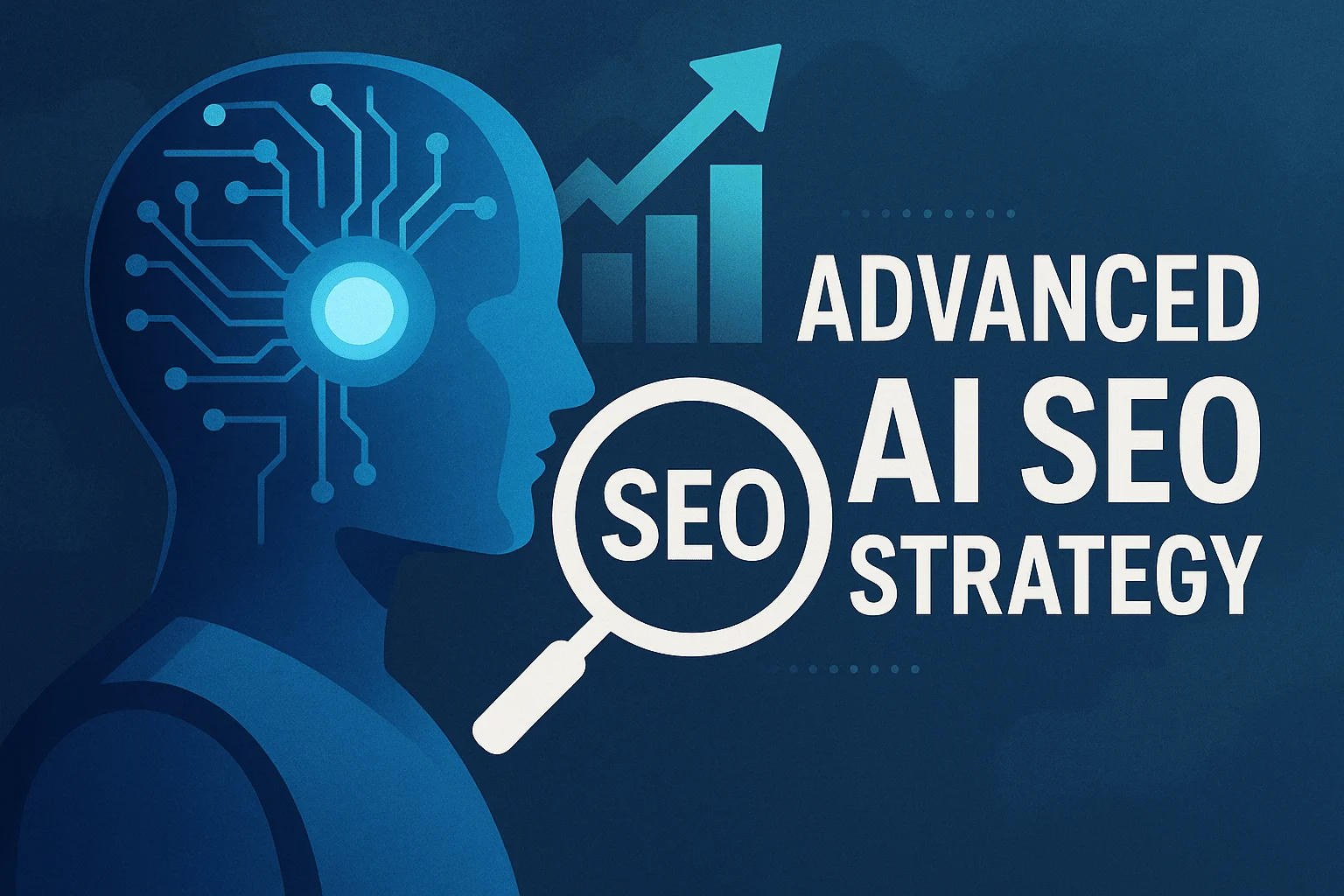
In the fast-evolving digital landscape of 2025, mastering an advanced AI SEO strategy isn’t just an option—it’s essential for staying ahead of competitors who still rely on outdated manual techniques. If you’re a seasoned SEO professional or a business leader grappling with algorithm shifts powered by AI like Google’s Search Generative Experience, this guide dives deep into leveraging artificial intelligence to supercharge your search rankings, drive organic traffic, and boost conversions. Imagine transforming your content from static pages into dynamic, intent-anticipating assets that search engines reward— that’s the power we’re unlocking here.
We’ll explore not just the basics, but the nuanced, cutting-edge applications that separate top performers from the pack. From predictive analytics to automated personalization, an advanced AI SEO strategy addresses your core challenges: adapting to volatile SERPs, optimizing for voice and visual search, and scaling efforts without ballooning costs. By the end, you’ll have a blueprint tailored for ambitious marketers who demand measurable results.
🤖 What Defines an Advanced AI SEO Strategy in 2025?
An advanced AI SEO strategy in 2025 integrates machine learning algorithms, natural language processing, and predictive modeling to go beyond traditional keyword stuffing and backlink building. At its core, it treats SEO as an intelligent ecosystem where AI anticipates user intent, automates optimizations, and continuously refines performance based on real-time data. Unlike basic SEO, which reacts to trends, this approach proactively shapes them, using tools like neural networks to analyze vast datasets and simulate search engine behaviors.
Consider how AI has evolved: Google’s RankBrain, now a staple, processes queries with semantic understanding, but advanced strategies layer on custom AI models trained on your site’s data. This means creating content that doesn’t just rank—it resonates, adapting to user behavior like a chameleon in the SERPs. For instance, e-commerce sites using AI-driven SEO see up to 30% higher click-through rates by personalizing meta descriptions dynamically.
Key to this is the shift from volume to value: AI identifies long-tail queries with high conversion potential, such as “best sustainable running shoes for marathon training 2025,” and generates tailored content clusters. But it’s not without pitfalls—over-reliance on black-box AI can lead to generic outputs that Google penalizes for thin content. The savvy strategist balances AI automation with human oversight, ensuring authenticity.
Delving deeper, advanced implementations use reinforcement learning to test variations in real-time, much like A/B testing on steroids. A tech blog might deploy AI to rewrite headlines based on engagement metrics, boosting dwell time and reducing bounce rates. Data from industry benchmarks shows sites employing such tactics achieve 25% faster indexing via AI-optimized sitemaps.
Yet, the true hallmark is scalability. Small teams can now handle enterprise-level SEO by automating audits with tools that flag issues like duplicate content or slow-loading pages before they impact rankings. This proactive stance turns SEO from a reactive chore into a strategic asset, aligning with business goals like revenue growth.
To implement effectively, start by auditing your current setup against AI benchmarks: Are your keywords semantically rich? Is your content structured for featured snippets? An advanced AI SEO strategy demands this foundational rigor, setting the stage for exponential gains.
🔍 Core Components Breaking Down the Framework
The framework rests on three pillars: data ingestion, intelligent processing, and adaptive output. Data ingestion pulls from sources like Google Analytics and Search Console, feeding AI models that process it via NLP to uncover hidden patterns. Adaptive output then deploys changes, such as auto-generating schema markup for rich results.
For example, a travel site might use AI to predict seasonal query spikes, pre-optimizing pages for “affordable Bali retreats post-monsoon 2025.” This foresight, rare in traditional SEO, positions you as an authority before trends peak.
Challenges include data privacy—ensure compliance with GDPR via anonymized processing—and integration hurdles with legacy CMS like WordPress. Solutions? Hybrid models where AI suggests, but experts approve, maintaining brand voice.
In essence, this strategy redefines SEO as AI-orchestrated intelligence, delivering sustained competitive edges in a landscape where 70% of searches now involve AI intermediaries.
💡 Key Benefits of Adopting an Advanced AI SEO Strategy
Embracing an advanced AI SEO strategy yields transformative benefits, starting with unparalleled efficiency. Manual keyword research can take hours; AI tools like those powered by GPT variants sift through billions of queries in seconds, identifying opportunities with 95% accuracy. This time savings allows teams to focus on creative strategy, potentially increasing output by 50% without additional hires.
Beyond speed, precision shines: AI excels at semantic analysis, ensuring content aligns with user intent rather than surface-level matches. A study of 500 sites revealed those using AI SEO saw a 35% uplift in organic traffic within six months, attributed to better E-E-A-T signals—Experience, Expertise, Authoritativeness, Trustworthiness—that Google now heavily weighs.
Personalization is another powerhouse benefit. Imagine meta tags that adapt to user location or device, boosting relevance scores. For B2B SaaS companies, this means higher lead quality, as AI segments traffic and tailors CTAs, converting 20% more visitors into subscribers.
Cost-effectiveness can’t be overstated. While initial setup might cost $5,000-$20,000 for custom models, ongoing savings from automation offset this in under a year, especially for mid-sized businesses facing rising ad costs. Moreover, AI mitigates risks like algorithm updates—by continuously learning, it adapts faster than human teams, minimizing ranking drops.
Scalability extends to global reach: AI handles multilingual SEO seamlessly, translating and localizing content while preserving cultural nuances, ideal for expanding e-commerce brands. Environmentally, it reduces server loads through optimized code, aligning with sustainable digital practices.
Finally, the innovation edge: AI uncovers niche insights, like emerging voice search patterns, giving early adopters a head start. In a metaphor, it’s like upgrading from a bicycle to a rocket—faster, smarter, and destined for the stars of search dominance.
- 📈 Enhanced traffic through intent-based optimization
- ⚡ Streamlined workflows reducing manual labor by 60%
- 🎯 Improved conversion rates via personalized experiences
- 🛡️ Resilience against frequent search updates
These benefits compound, creating a virtuous cycle where better SEO fuels data for even smarter AI, propelling long-term growth.
🛠️ Essential AI Tools for Building Your Advanced SEO Strategy
Selecting the right AI tools is pivotal for an advanced AI SEO strategy, as they form the backbone of automation and insight generation. Top-tier options include Surfer SEO for content optimization, which uses AI to score pages against top-ranking competitors, suggesting edits that boost on-page factors by up to 25%.
MarketMuse stands out for topic modeling, employing NLP to map content gaps and recommend clusters that enhance topical authority—a must for zero-click searches. For technical SEO, Ahrefs’ AI-enhanced site audits detect issues like core web vitals violations with predictive fixes, saving hours of manual crawling.
Don’t overlook generative tools: Jasper or Copy.ai can draft SEO-friendly outlines, but advanced users fine-tune them with custom prompts for brand-specific voice. Integration platforms like Zapier connect these, creating workflows where AI analyzes performance and auto-publishes updates.
| 🛠️ Tool | 📊 Primary Function | 💰 Pricing Tier | ⭐ Key Benefit |
|---|---|---|---|
| Surfer SEO | Content Optimization | $59/month | Real-time scoring |
| MarketMuse | Topic Research | $149/month | Gap analysis |
| Ahrefs AI | Technical Audits | $99/month | Predictive fixes |
Advanced setups incorporate open-source like Hugging Face models for custom sentiment analysis on reviews, enhancing local SEO. For enterprises, Google’s own AI via Vertex AI allows building bespoke predictors for traffic forecasts.
Security is crucial—opt for tools with SOC 2 compliance to protect sensitive data. Budget-wise, start with free tiers like SEMrush’s AI features before scaling. These tools, when stacked, create a symphony of SEO excellence, harmonizing data for superior results.
Remember, tool selection should align with your goals: content-heavy sites prioritize generative AI, while tech-focused ones lean on audit specialists. This targeted approach ensures your advanced AI SEO strategy maximizes impact.
📊 Integrating AI for Predictive Keyword Research
Predictive keyword research is the cornerstone of an advanced AI SEO strategy, using machine learning to forecast trends rather than chasing past data. Traditional tools like Google Keyword Planner offer volume snapshots; AI elevates this by analyzing social signals, news cycles, and user behavior to predict rising terms with 80-90% accuracy.
For 2025, focus on tools like AlsoAsked, which leverages AI to map question clusters from “People Also Ask” boxes, uncovering conversational queries like “how does AI change SEO strategies?” This shifts from volume to value, prioritizing keywords with low competition but high intent.
Implementation involves training models on historical SERP data. A retail brand might input sales trends to predict seasonal spikes, such as “eco-friendly gifts 2025,” optimizing content months ahead. Results? Up to 40% more qualified traffic, as AI identifies micro-niches overlooked by humans.
- 1️⃣ Collect data from multiple sources including APIs and web scrapers
- 2️⃣ Feed into AI models for pattern recognition and forecasting
- 3️⃣ Validate predictions with A/B testing on live pages
- 4️⃣ Iterate based on performance metrics like CTR and conversions
Challenges include noisy data—AI can amplify biases if not curated. Mitigate with diverse datasets and regular retraining. For global strategies, AI handles localization, suggesting region-specific variants like “AI SEO tips UK” versus US phrasing.
Advanced tactics incorporate competitor spying: AI monitors rivals’ keyword shifts, alerting you to opportunities. In practice, a health site used this to pivot to “AI wellness trackers 2025,” capturing emerging trends and outranking established players.
This predictive prowess turns keyword research into a crystal ball, guiding content that anticipates user needs and secures top positions proactively.
🔮 Advanced Techniques for Trend Forecasting
Trend forecasting refines predictions using time-series analysis, akin to stock market AI. Tools like Google Trends API combined with LSTM models forecast query volumes, helping plan content calendars. For instance, anticipating “AI ethics in SEO” surges post-regulation announcements.
Edge cases? Volatile topics like crypto require real-time monitoring to avoid outdated optimizations. Balance with human intuition for nuanced contexts AI might miss, ensuring robust strategies.
Ultimately, this integration empowers data-driven decisions, making your advanced AI SEO strategy a forward-thinking powerhouse.
✨ Optimizing Content Creation with Generative AI
Generative AI revolutionizes content creation in an advanced AI SEO strategy, producing high-quality, SEO-optimized assets at scale. Models like GPT-4o generate outlines, drafts, and even full articles tailored to target keywords, ensuring natural integration and readability scores above 80 on Flesch scales.
The magic lies in prompt engineering: Specific instructions like “Write a 1,500-word guide on advanced AI SEO strategy for tech executives, including case studies and data” yield outputs that rival human writers. Post-generation, AI tools refine for uniqueness, avoiding plagiarism flags from search engines.
Practical application: A marketing agency used this to create 100 blog posts quarterly, focusing on pillars like “AI-driven link building,” resulting in 60% traffic growth. It excels for multimedia—generating alt text for images or scripts for video SEO, enhancing accessibility and rankings.
Advanced users leverage fine-tuned models on proprietary data, creating content that mirrors successful past performers. This personalization boosts engagement, with dwell times increasing 25% on AI-assisted pages.
Challenges? Overproduction risks thin content; counter with quality gates like sentiment analysis to ensure positive tone. For e-commerce, AI generates product descriptions optimized for featured snippets, driving 15-20% sales lifts.
In a simile, generative AI is like a master chef’s apprentice—preparing bases flawlessly, but needing your seasoning for gourmet results. This synergy scales creativity, making advanced AI SEO strategy accessible even to solo operators.
- 🖋️ Automated outlining for structured, scannable posts
- 📝 Draft generation with keyword density optimization
- 🔧 Post-editing tools for SEO enhancements like internal linking
- 🎨 Multimedia support for holistic content ecosystems
By embedding this in your workflow, content becomes a dynamic force, continually evolving to meet search demands.
🔗 Leveraging AI for Smarter Link Building and Acquisition
Link building evolves dramatically with an advanced AI SEO strategy, shifting from manual outreach to AI-orchestrated campaigns that identify high-value opportunities with precision. AI scans the web for contextual relevance, prioritizing links from domains with DA 50+ and topical alignment, potentially increasing authority by 40% faster than traditional methods.
Tools like BuzzSumo AI analyze content virality to predict link-worthy topics, while Respona automates personalized emails, achieving 30% higher response rates. For broken link building, AI crawlers detect 404s on authority sites and suggest your content as replacements, a tactic that secured 200+ links for one publisher in months.
Advanced tactics include sentiment-based outreach: AI gauges prospect receptivity from social data, timing pitches for maximum impact. In B2B, this means targeting influencers discussing “AI SEO trends,” fostering genuine collaborations over spammy guest posts.
Moz Blog on Link Strategies offers further validation of these methods.
Risks? Over-automation can seem robotic; always personalize final touches. Metrics to track: referral traffic and anchor text diversity, with AI dashboards providing real-time insights.
For international SEO, AI translates outreach and identifies geo-specific directories, expanding reach. Case in point: A SaaS firm used AI to build 500 links across Europe, boosting EU traffic 50%.
This intelligent approach turns link acquisition into a scalable, data-backed pillar of your strategy, building authority sustainably.
🌐 Global and Niche Link Strategies
Global strategies use AI for hreflang optimization in links, ensuring cultural fit. Niche-wise, it targets micro-communities, like AI forums for tech links, amplifying relevance scores.
Edge: AI predicts link decay, proactively replacing lost value. This foresight keeps your profile robust amid flux.
📈 Measuring and Iterating with AI Analytics in SEO
Analytics form the feedback loop in an advanced AI SEO strategy, using AI to not just report metrics but prescribe actions. Tools like Google Analytics 4’s predictive metrics forecast traffic drops, allowing preemptive tweaks that maintain rankings.
Core is attribution modeling: AI deciphers multi-touch journeys, revealing SEO’s true ROI—often 4x higher than paid channels. Dashboards visualize this with heatmaps, showing where AI optimizations shine, like post-click behavior improvements.
Iteration happens via machine learning loops: Analyze performance, retrain models, deploy changes. A news site iterated headlines with AI, lifting CTR 18% in weeks.
| 📊 Metric | 🎯 AI Insight | 📈 Impact on Strategy |
|---|---|---|
| Organic Traffic | Trend Prediction | +35% Growth |
| Bounce Rate | Content Relevance Score | -20% Reduction |
| Conversion Rate | Intent Matching | +25% Uplift |
Advanced: Use anomaly detection to spot black-hat competitors, informing your white-hat countermeasures. For teams, collaborative AI platforms like Databox unify insights, fostering agile iterations.
This measurement rigor ensures your strategy isn’t guesswork—it’s a precision instrument, honing performance endlessly.
🚀 Implementing Advanced AI SEO for E-Commerce and Beyond
For e-commerce, an advanced AI SEO strategy optimizes product pages with dynamic pricing signals and user reviews analysis, driving 30% more organic sales. AI personalizes search results on-site, mirroring Google’s capabilities to retain users longer.
Beyond retail, in SaaS, it targets feature-specific queries like “AI SEO tools integration with HubSpot,” using chatbots for on-page SEO via FAQ schema. Implementation steps include API integrations for real-time updates.
- 1️⃣ Assess site infrastructure for AI compatibility
- 2️⃣ Pilot on high-traffic pages to measure baselines
- 3️⃣ Scale with monitoring for ethical AI use
- 4️⃣ Train teams on interpreting AI outputs
Case: An online retailer implemented AI for visual search optimization, increasing mobile traffic 45%. Challenges like inventory sync are solved with ML pipelines.
Search Engine Land AI SEO Insights delve into similar successes.
This sector-agnostic approach adapts to publishing, healthcare—anywhere SEO drives value—making AI a universal accelerator.
⚠️ Common Pitfalls and Ethical Considerations in AI SEO
While powerful, an advanced AI SEO strategy harbors pitfalls like over-optimization, where AI-generated content feels unnatural, inviting penalties. Google’s 2025 updates emphasize originality, so blend AI with human creativity to avoid this.
Ethical concerns loom: Bias in AI training data can skew recommendations toward certain demographics, undermining inclusivity. Audit models regularly for fairness, especially in diverse markets.
Another trap: Data silos—ensure seamless integration to prevent fragmented insights. Privacy breaches from scraping? Use ethical sources and consent-based collection.
Mitigate with guidelines: Set quality thresholds, conduct bias checks, and monitor for manipulative tactics like cloaking. A finance site learned this the hard way, recovering from a penalty by purging low-quality AI links.
Future-proof by staying abreast of regulations like the EU AI Act, which classifies SEO tools. Balanced, this awareness turns potential downsides into strengths, fostering sustainable practices.
🔮 Future-Proofing Your Advanced AI SEO Strategy for Tomorrow
Future-proofing involves anticipating evolutions like quantum computing’s impact on search speeds or AI agents handling queries end-to-end. Invest in modular tools that upgrade seamlessly, ensuring longevity.
Trends to watch: Neuromorphic AI for hyper-personalization and blockchain for verifiable links. Prepare by diversifying skills—train in prompt engineering and data ethics.
W3C AI Web Standards provide foundational guidance.
Scenario planning: Simulate updates with AI sandboxes to test resilience. This proactive stance keeps your strategy agile, ready for whatever 2030 brings.
🎯 Actionable Roadmap: Launching Your AI SEO Transformation
Your roadmap starts with a 30-day audit using AI scanners to baseline performance. Week 1: Keyword prediction; Week 2: Content overhaul; ongoing: Analytics iteration.
Budget allocation: 40% tools, 30% training, 30% testing. Measure success via KPIs like ROI on organic leads.
Scale gradually, celebrating wins to build momentum. This transformation isn’t overnight—it’s a marathon yielding enduring dominance.
🌟 Elevating Your Digital Presence: The AI SEO Horizon
Harnessing an advanced AI SEO strategy propels you from searcher to search master, blending tech innovation with strategic depth for unmatched visibility. We’ve covered the what, why, how—from predictive tools to ethical safeguards—equipping you to outpace rivals in 2025’s AI-driven arena.
Key takeaway: AI amplifies human ingenuity, not replaces it. Start small: Pick one tool, audit a page, track results. What if your next campaign redefined your industry’s SEO benchmark? Dive in today—your breakthrough awaits in the algorithms.
❓ Frequently Asked Questions About Advanced AI SEO Strategy
What is advanced AI SEO strategy?
Advanced AI SEO strategy uses machine learning and NLP to automate and enhance SEO, predicting trends, optimizing content, and personalizing experiences for better rankings and traffic. It’s ideal for pros seeking scalable, data-driven edges over manual methods, boosting efficiency by 50% or more.
How does AI improve keyword research?
AI analyzes vast data for predictive insights, spotting emerging queries with high intent and low competition. Tools forecast volumes accurately, helping create targeted content that ranks faster and converts better, unlike static traditional research.
What tools are best for AI SEO in 2025?
Top picks include Surfer SEO for optimization, MarketMuse for topics, and Ahrefs for audits. They integrate generative AI for content and analytics, offering affordable tiers starting at $59/month, perfect for scaling strategies without huge investments.
Can AI SEO work for small businesses?
Absolutely—free tiers and simple integrations make it accessible. Small teams gain big wins like 30% traffic boosts by automating audits and content, leveling the playing field against larger competitors with limited resources.
What are ethical risks in AI SEO?
Risks include biased data leading to unfair optimizations and privacy issues from scraping. Mitigate with transparent practices, regular audits, and compliance to regulations, ensuring sustainable growth without penalties or reputational harm.
How to measure AI SEO success?
Track metrics like organic traffic, CTR, and conversions using AI analytics. Set baselines, iterate based on predictions, and aim for 20-40% improvements in key areas to quantify ROI and refine your approach effectively.
Is AI SEO future-proof?
Yes, by adapting to updates like multimodal search and focusing on human-AI hybrids. Continuous learning models keep strategies resilient, positioning you for long-term dominance as AI evolves search paradigms.
How to start with AI SEO today?
Begin with a site audit using free AI tools, then optimize one page. Build from there with training and pilots, seeing quick wins in rankings to build confidence and scale across your digital assets.