
🎯 Why You Searched “how to search keywords for website” — And What You’ll Actually Get
You typed how to search keywords for website because you want traffic that converts, not vanity metrics. You want a repeatable method that works in 2025 against shifting SERPs, AI Overviews, and algorithmic nuance. You don’t want fluffy tips; you want a system—clear steps, smart tools, and decision criteria that remove guesswork. That’s exactly what this guide delivers.
✅ Expect a practitioner’s blueprint: who you’re targeting, which data matters, how to extract intent from language, and how to cluster, prioritize, and map keywords to content that ranks and earns. We’ll reverse-engineer SERPs, use NLP-level thinking without the PhD, and finish with a 30-day action plan. Along the way, we’ll reference authoritative resources so you can validate every move.
🧠 Think of keyword research like cartography: you’re charting a map of demand, intent, and competition. Each term is a coordinate; each cluster is a region. Your job is to draw borders wisely, build roads between them, and establish cities—pillar pages with supportive internal links—so users and crawlers navigate with ease.
By the end, you’ll know how to search keywords for website in a way that’s fast, accurate, and strategic—so each page you publish has a premeditated chance to rank, win clicks, and turn those clicks into customers.
🧭 Audience, Intent, And NLP: The Psychology Behind Queries
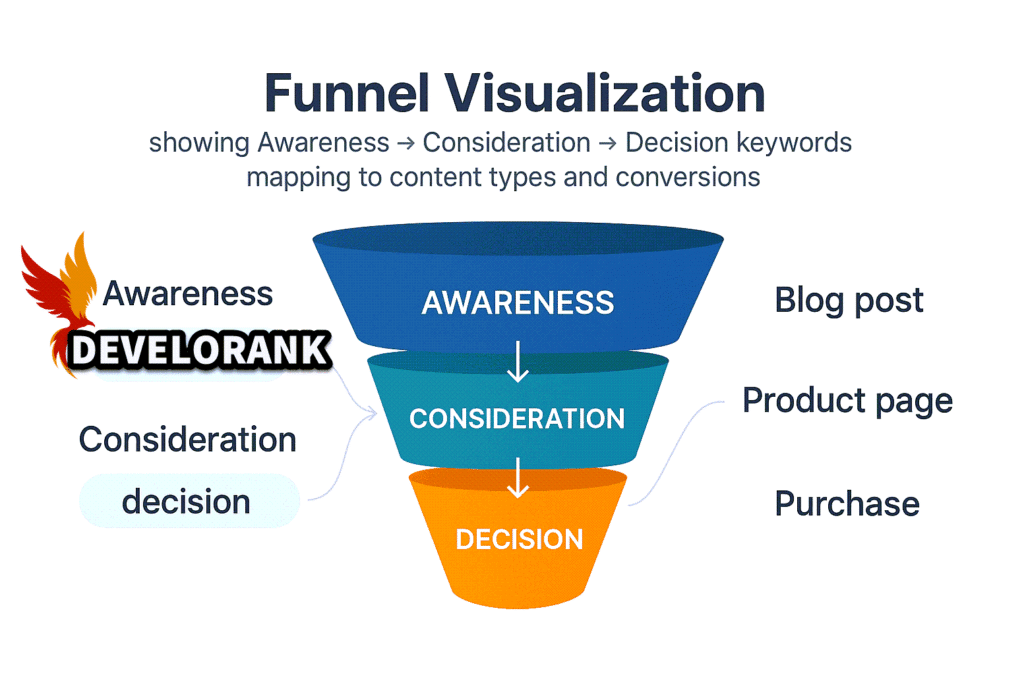
When you decide how to search keywords for website, start with people, not tools. Every query is a compressed story: a goal, a belief, and a friction point. Use light NLP thinking to unpack it. Cluster by semantics and intent, then map to your funnel. The result is messaging that resonates and search results that stick.
🧑💻 Reader Avatar: The Practical Strategist
Your likely reader is a practical strategist: a startup marketer, solo founder, or content lead. They’re analytical, time-constrained, and allergic to fluff. Their pain points: not knowing where to start, choosing between tools, and bridging data to content briefs quickly. Their risk: over-relying on volume and ignoring intent, resulting in content that ranks but doesn’t convert. Use an ethical niche marketing strategy that pays off long term for best results.
🧠 Intent Layers You Must Decode
• Awareness: “what is…”, “examples of…”, “benefits of…”. Informational intent demands clear definitions, diagrams, and comparisons.
• Consideration: “best…”, “top…”, “alternatives…”. Commercial investigation requires structured comparisons, criteria, trust signals, and updated data.
• Decision: “pricing”, “plans”, “trial”, “near me”. Transactional content should be fast, persuasive, and frictionless.
• Troubleshooting: “fix…”, “error…”, “does X work with Y?”. Problem-solution content earns links and long-tail dominance.
🧩 Language Signals That Reveal Intent
Notice modifiers and entities. “Best” suggests comparison intent; “for [use-case]” reveals audience segment; “vs” suggests binary decision. Entities (brands, tech, locations) anchor the topic. Synonyms and related terms (latent semantics) expand relevance without stuffing.
Use this psychology to guide how to search keywords for website: don’t chase volume; chase fit. SERPs reward pages that satisfy the specific intent pattern better than anyone else on page one.
🧱 From Zero To Seed List: A Structured, 10-Step Walkthrough
If you’re new or rebuilding, here’s the crisp sequence you can follow today to master how to search keywords for website. It’s lean, reliable, and repeatable.
- 1️⃣ Define the outcome: traffic, leads, revenue, or authority. Tie keywords to KPIs.
- 2️⃣ Profile the audience: role, job-to-be-done, pains, vocab they actually use.
- 3️⃣ Mine internal language: sales calls, support tickets, chat logs, feature names.
- 4️⃣ Scrape SERPs: note People Also Ask, Related Searches, and features shown.
- 5️⃣ Analyze competitors: titles, H2s, schema, content gaps, backlinks anchors.
- 6️⃣ Expand with tools: blend planner data, Trends, and third-party estimations.
- 7️⃣ Classify intent: awareness, consideration, decision; tag each term accordingly.
- 8️⃣ Cluster by topic: group terms by semantic proximity and SERP similarity.
- 9️⃣ Score opportunities: volume, difficulty, business value, SERP volatility.
- 🔟 Map to pages: assign one intent per URL; draft content briefs immediately.
Each step compacts uncertainty. The compounding effect is profound: you’ll build a topic map that outlives trends and still adapts to them. This is the mental model behind how to search keywords for website without wasting a month.
🧰 Tool Stack For 2025: Free + Paid, And How They Fit Together
You can learn how to search keywords for website with lightweight tools—then add paid power when it pays back. Use free sources for truth signals; layer paid tools for breadth, speed, and competitive telemetry.
Authoritative primers and official documentation are your anchors:
• Read the Google SEO Starter Guide for indexability and fundamentals.
• Use Google Keyword Planner docs to understand volume buckets and forecasting.
• For deeper theory on term relevance and retrieval, study Stanford’s Introduction to Information Retrieval.
Combine them with your working stack:
- 🧭 Google Search Console: impression queries, page cannibalization, CTR gaps.
- 📈 Google Trends: seasonality, breakout terms, rising topics to preempt demand.
- 🧪 Keyword Planner: seed volume + CPC as a rough commercial signal.
- 🕵️ Third-party tools: competitive gaps, KD proxies, SERP history, clicks per search.
- 🧰 SERP scrapers: PAA, related searches, People Also Search For, FAQs.
- 🧠 NLP helpers: entity extractors, clustering scripts, phrase frequency tools.
| 🧰 Task | 💸 Free Option | 💼 Paid Option | ⏱️ When To Use |
|---|---|---|---|
| Seed Discovery | Search Console, Trends | Ahrefs/Semrush/SimilarWeb | Need breadth + competitors |
| Volume Signal | Keyword Planner (ranges) | Refined estimates + CPS | Paid ads/SEO combined |
| SERP Features | Manual checks, PAA scrapers | SERP feature trackers | Scale + historical view |
| Clustering | Sheets + cosine similarity | Embeddings in SaaS tools | Fast topic maps at scale |
🔍 Expansion Techniques: SERPs, Competitors, And Real Customer Language
Here’s where how to search keywords for website becomes a growth loop. After seeds, you expand with precision. The objective is to capture the language your market naturally uses—not just what tools report.
🧑🤝🧑 Mine Customer-Generated Language
Pull phrases from sales notes, transcripts, community posts, and review sites. Look for repeated pain terms and modifiers like “simple”, “secure”, “self-serve”, “HIPAA”, or “budget-friendly”. These modifiers often shape mid-funnel intent better than head terms ever could.
🧭 Reverse-Engineer Competitors
Collect competitor title tags, H2s, and internal link anchors. Identify gaps: topics with weak coverage or outdated data. Use those gaps to form clusters where you can win with fresher, denser, and more helpful content.
🧷 Harvest SERP Features
Scrape People Also Ask; extract question stems and cluster by pattern. Check Related Searches to find adjacent opportunity. If videos dominate, plan a mixed format page with a video summary and transcript. If AI Overviews appear, your answers must be concise, cited, and entity-rich.
As you apply these, you’ll naturally learn how to search keywords for website with a bias toward real-world language and SERP reality—two forces that will keep you a step ahead.
📊 Metrics That Matter In 2025: From Volume To Clicks Per Search
Everyone obsesses over search volume, but volume alone is a mirage. To master how to search keywords for website, evaluate terms through a matrix of difficulty, traffic behavior, and business impact. Use data to choose battles you can win now while seeding long-term moats.
| 📏 Metric | 🧠 What It Tells You | 🎯 2025 Target Signals |
|---|---|---|
| Search Volume | Relative demand (proxy) | Don’t over-weight; validate with Trends |
| Keyword Difficulty | Proxy for link/content strength needed | Favor lower KD with strong commercial fit |
| Clicks Per Search (CPS) | How many clicks actually occur | Prefer 0.8+ when available |
| SERP Features | Visibility hurdles or unfair advantages | Target features you can win (FAQs, videos) |
| Business Value | Lead/revenue alignment | Score high for decision-intent queries |
🔎 Bonus signals: brand bias (top-heavy with dominant brands?), SERP volatility (is ranking turnover high?), and link magnetism (does the topic naturally earn links?). These micro-signals determine how quickly you can land on page one and stay there.
🧠 NLP Tactics: Entities, Clustering, And Topical Authority Without The Jargon
You don’t need a PhD to use NLP concepts in how to search keywords for website. You just need a few practical moves:
🧩 Entity-First Thinking
Identify key entities (people, brands, standards, technologies) for your topic. Ensure your pages mention them naturally with context and relationships. Entity richness improves retrieval relevance and helps AI Overviews cite you.
🧮 Simple Clustering
Group terms by shared SERP overlaps. If the same pages rank for multiple terms, those queries likely belong to one cluster and one page. If different pages rank, split into separate URLs. This is the fastest heuristic you can apply at scale.
🪢 Topical Authority
Publish clusters as collections: a pillar page + supporting posts. Link them with descriptive anchors. Cover breadth (adjacent subtopics) and depth (examples, data, FAQs). Over time, your domain becomes the obvious answer, not just an answer.
As you integrate entities and clusters, you’ll execute how to search keywords for website with a structural advantage that compounds with each new page you publish.
🧪 SERP Reverse-Engineering: Read The Result Before You Write
If page one is the exam, SERPs are your answer key. Before drafting anything, analyze what Google is rewarding for your target query set. This is the fastest way to internalize how to search keywords for website while eliminating avoidable rewrites.
🔭 Identify Result Archetypes
Do you see listicles, how-tos, calculators, or comparison grids? If the top five are all in one archetype, conform first, then differentiate with depth, data freshness, and UX enhancements (interactive elements, checklists, or tools).
🎛️ Map SERP Features To Content Elements
• PAA: include a concise FAQ section leveraging those questions.
• Videos: add a short video summary embedded near the top.
• AI Overviews: lead with a crisp, cite-able paragraph; include sources and entities.
• Local pack: add location intent or create a dedicated local landing page.
This pre-writing discipline ensures your work mirrors the real-world standard—crucial for how to search keywords for website with high hit rates.
🗺️ From Keywords To Architecture: Mapping, Cannibalization, And Internal Links
Keyword research isn’t finished until each term is assigned to a page or cluster. This is where how to search keywords for website transforms into a site architecture that crawlers love and users find intuitive.
🧭 One Intent, One URL
Assign one dominant intent per page. Use supporting pages for alternative angles (use-case, industry, role). Interlink with descriptive anchors—avoid generic “read more.”
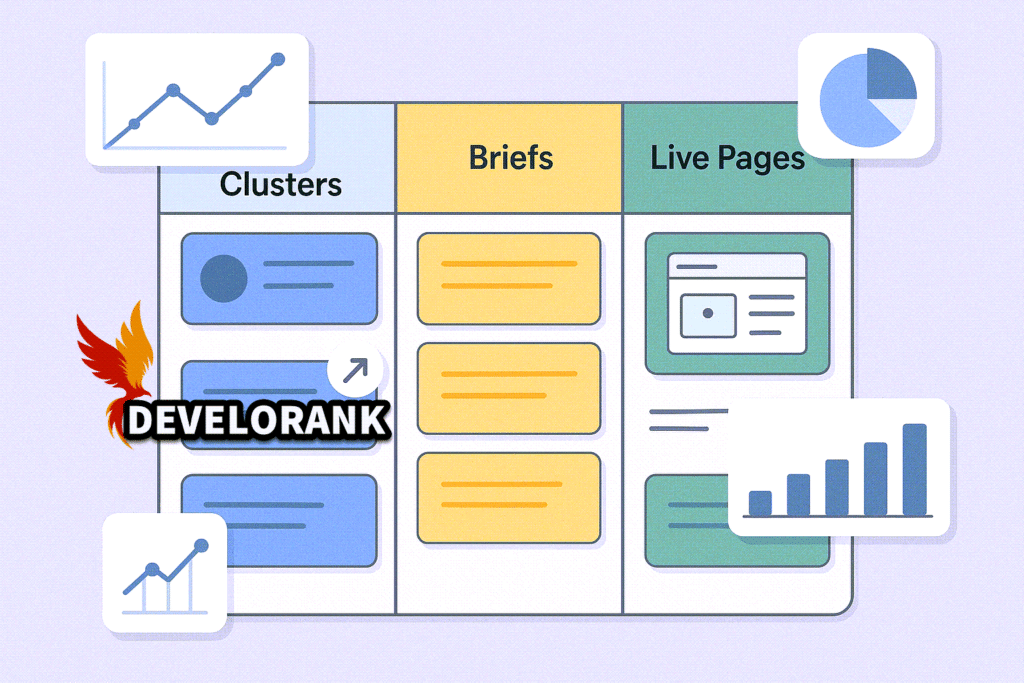
🧵 Hub-And-Spoke Clusters
Build a hub (pillar) targeting the core term; link to spokes targeting sub-queries. Each spoke links back to the hub and laterally to siblings when relevant. This pattern signals topical depth and distributes PageRank efficiently.
🧹 Cannibalization Hygiene
Check Search Console for pages ranking for the same term. Merge overlapping content or differentiate with intent. Use canonical tags or 301s when consolidating. Proper hygiene boosts page authority and stabilizes rankings.
✍️ Content Briefs That Rank: Outlines, Evidence, And On-Page Signals
Mastering how to search keywords for website culminates in briefs that scale quality. A great brief ensures writers deliver the exact page Google and users expect—first time. Things change and may require staying up to date with digital marketing and SEO news on industry blogs
🧱 Brief Essentials
- 🧩 Primary keyword + cluster members with intent and priority
- 🧭 Target reader persona + problem statement
- 🧪 SERP archetype + mandatory subheadings to beat page one
- 📚 Sources to cite: industry data, standards, and official docs
- 🗣️ Style guide: reading level, tone, and examples to include
- 🧷 On-page: title tag, meta, H2/H3, schema, internal links
📑 On-Page Optimization
Place the primary term early in the title and introduction. Use natural variations, entities, and synonyms throughout. Add a succinct answer near the top (40–60 words) for instant snippet/overview alignment. Include FAQ schema, and if appropriate, product, how-to, or review schema.
“What gets measured gets managed.” – Peter Drucker
Measure adherence to the brief in editing. Your editorial checklist should be as rigorous as your research. This is how to search keywords for website and consistently translate that research into ranking content.
🚦 Prioritization: ICE, RICE, And The 80/20 Content Roadmap
Not all keywords deserve immediate action. Use prioritization formulas to serialize execution. This allows you to ship high-impact pages first while incubating long-term bets.
🧮 Scoring Model (RICE)
- 📡 Reach: forecasted sessions in 90 days
- ⚡ Impact: lead or revenue potential (relative)
- ✅ Confidence: data quality + SERP volatility
- ⏱️ Effort: content complexity + link requirement
Score each cluster and sort. Quick wins: low KD, high CPS, tight intent fit. Big bets: high KD but critical for positioning. Balance both.
Apply this rigor and you’ll never wonder how to search keywords for website and what to publish first—your scoring model will tell you.
📈 Validation And Iteration: Proving Your Keyword Bets
The loop closes when you validate. How do you know your approach to how to search keywords for website is actually working? You test, measure, and iterate—deliberately.
🧪 Pre-Launch
• Title/angle A/B test on paid social or small PPC spend to gauge curiosity and CTR.
• Ask SMEs to review for accuracy and completeness. Quality outranks cleverness.
📊 Post-Launch
• Track impressions, average position, and CTR in GSC at 7/14/28 days.
• Monitor engagement: scroll depth, time on page, and conversion micro-events.
• Update with FAQs discovered in PAA or search console queries; nudge for freshness.
Validation turns assumptions into assets. That’s the grown-up version of how to search keywords for website: rigorous, feedback-driven, and compounding.
🛡️ Pitfalls, Myths, And E-E-A-T Alignment In 2025
There are traps everywhere. Avoid these and your process for how to search keywords for website will remain sharp for years.
- 🚫 Overweighting volume: pursue business value and CPS, not vanity numbers.
- 🌀 Mixing intents on one page: creates cannibalization and confused UX.
- 🧮 Blindly trusting KD: it’s a proxy; corroborate with SERP reality.
- 🧊 Static research: schedules slip, data ages; refresh quarterly.
- 🧷 Thin FAQs: add real questions; skip filler. Cite authoritative sources.
- 🧭 Ignoring E-E-A-T: show who wrote it, credentials, and how you know.
Strengthen E-E-A-T: add author bios, references to credible documentation, and transparent methodologies. For sensitive niches, increase citations and review by certified experts. The higher the stakes, the higher the bar.
🧭 Your 30-Day Action Plan: From Research To Revenue
Commit to a sprint. Here’s a focused plan that operationalizes how to search keywords for website and ship outcomes, not spreadsheets.
- 1️⃣ Days 1–3: Interview sales/support; mine language; build initial seeds.
- 2️⃣ Days 4–6: SERP analysis; classify intent; build 3–5 clusters.
- 3️⃣ Days 7–9: Score with RICE; pick 1 pillar + 4 spokes.
- 4️⃣ Days 10–14: Draft briefs; line up SMEs; assign writers.
- 5️⃣ Days 15–21: Publish pillar + 2 spokes; interlink thoroughly.
- 6️⃣ Days 22–24: Promote via email, social, and partner links.
- 7️⃣ Days 25–30: Monitor GSC; add FAQ schema; iterate titles/meta.
By day 30, you’ll have a live cluster generating impressions and data. That feedback fuels the next sprint and lowers risk with every iteration.
🌟 Putting It All Together: The Confident Way To Win With Keywords
If you remember one idea about how to search keywords for website, let it be this: start with intent, validate with SERPs, and operationalize with briefs and measurement. Tools assist; judgment decides. When in doubt, choose clarity over cleverness, specificity over generalities, and users over algorithms. Algorithms are simply trying to model user satisfaction anyway.
Ready to move? Pick one cluster that matches a revenue moment and run the 30-day plan. Then ask: Which query did we satisfy best? Which one needs deeper proof, better examples, or a new angle? That conversation is how teams get world-class at keyword research—one iteration at a time.
❓ FAQs About Keyword Research That Actually Help
🤔 What’s the fastest way to build a seed keyword list?
Start with internal language: sales calls, support tickets, and product docs. Add 10–20 competitor titles and H2s, then mine SERPs for People Also Ask and Related Searches. Use Google Trends to validate momentum and seasonality. This mix of real customer language and live SERP patterns rapidly creates a high-signal seed list without getting trapped in tool-only thinking.
🧭 How do I choose between two similar keywords?
Open both SERPs and compare overlap. If page-one results are nearly identical, target both with one page and use one as the primary keyword. If SERPs differ significantly, split into separate URLs based on intent. Always weigh business value and clicks per search; the better commercial fit usually wins your priority.
📏 How much does search volume really matter?
Volume is a directional signal, not a decision-maker. Prioritize terms with strong commercial intent, higher clicks per search, and a SERP layout you can realistically win. Smaller-volume, high-intent keywords often outperform big head terms in conversions and time-to-rank. Use Trends to check momentum before committing to low-volume bets.
🔗 How can I avoid keyword cannibalization?
Assign one intent per URL and keep a living map of target terms. Quarterly, use Search Console to find pages ranking for the same query. Consolidate or differentiate with clearer angles and internal linking. Use 301s or canonicals when merging content. This hygiene protects authority and stabilizes rankings across clusters.
🧠 Should I use AI tools for keyword clustering?
Yes, as accelerators—not oracles. AI-assisted clustering can suggest groups fast, but always validate with SERP overlap and intent checks. Use AI to draft variations and FAQs; use human judgment to finalize page structure and messaging. The best results blend AI speed with editorial quality controls and expert review.
🧩 How do I optimize for AI Overviews?
Lead with a concise, factual summary and strong entity coverage. Answer the query directly in 40–60 words, cite authoritative sources, and include structured data (FAQ, HowTo, Product) when relevant. Ensure sections align with People Also Ask patterns. Keep content updated; freshness and clear citations improve inclusion odds.
🚀 What’s a simple 30-day keyword research plan?
Week 1: gather language and build seeds. Week 2: analyze SERPs, classify intent, and form 3–5 clusters. Week 3: prioritize with RICE and draft briefs. Week 4: publish pillar + 2 spokes, interlink, and measure in Search Console. Promote lightly and refine titles/meta from real query data.